Health and Safety Policy — Commercial Waste Removal Osterley
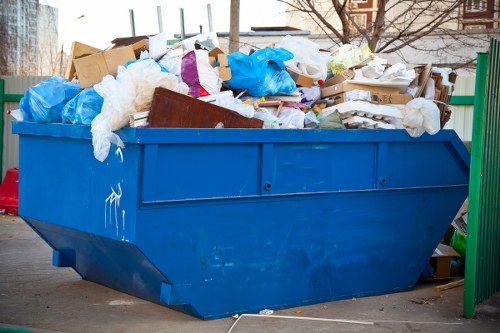 This Health and Safety policy sets out the commitments and operational expectations for our commercial waste removal operations serving the local service area. It applies to every employee, subcontractor and authorised visitor engaged in commercial waste removal in Osterley and associated duties. The purpose is to protect people, property and the environment by describing clear responsibilities, risk controls and reporting mechanisms for all phases of rubbish collection, transfer and disposal.
The policy is founded on the principles of legal compliance, continuous improvement and proportional risk management. All staff must read and understand their roles; managers are responsible for implementation, monitoring and improving this policy. Training, supervision and documented risk assessments form the backbone of a safe rubbish removal service so that each job is planned to remove hazards before work begins.
 We maintain a systematic approach to hazard identification across site visits, depots and vehicles. This includes pre-task briefings, vehicle checks, manual handling assessments and segregation of waste streams such as general commercial refuse, recyclable materials and potentially hazardous items. Where hazardous or unknown materials are discovered, operations stop and a senior qualified person is notified immediately.
Our operational controls concentrate on preventing incidents through engineering, administrative and behavioural measures. Key measures include:
- PPE standards (hi-vis, gloves, safety boots, eye protection and respiratory protection where required)
- Vehicle safe loading and securing procedures
- Use of mechanical aids for heavy or bulky items
Responsibilities and Competence
Every person engaged in rubbish removal services Osterley must be competent for the task assigned. Supervisors will ensure staff have adequate training and licences for vehicle operation, handling of commercial waste containers and any specific equipment used. Contractors and temporary operatives will be vetted and required to provide evidence of training and insurance before commencing work. We use a permit and authorisation system for higher risk activities such as working at height on container lifts, confined space access to certain waste enclosures, and handling of chemically contaminated loads. The permit system ensures clear control measures are in place and that emergency arrangements are known by all personnel involved.
Risk Management, Monitoring and Incident Reporting
Risk assessments are carried out for routine and non-routine tasks and are kept up to date. Monitoring is performed through toolbox talks, vehicle telemetry where fitted and periodic audits of depots and sites. All incidents, near misses and unsafe conditions must be reported immediately and are investigated to identify root causes and corrective actions. Records of investigations and remedial actions are maintained to support continuous improvement. Emergency procedures cover first aid, fire response and spill control. Staff must be familiar with the location of first aid kits, spill kits and fire extinguishers, and know the escalation route to site managers. In the event of a significant release or injury, operations are suspended until it is safe to resume. The policy emphasises that the welfare of people comes before the continuity of operations.
 Contractor management and subcontracting controls are central to our compliance strategy. This includes pre-qualification checks, clear contractual safety obligations and periodic performance reviews. We require contractors to operate to equivalent safety standards and to co-operate on site-specific arrangements when providing rubbish removal or commercial waste management services.
Maintenance of plant and vehicles is scheduled to reduce the likelihood of mechanical failure and associated hazards. Daily vehicle checks, planned servicing and prompt repair of faults are mandatory. Waste containers are inspected for structural damage, sharp edges and contamination and are withdrawn from use if found defective. Record keeping for maintenance, inspections and training is retained in accordance with company retention schedules.
Health considerations include manual handling protocols, noise assessments and controls, and measures to reduce exposure to dust and bioaerosols. Where clinical or hazardous waste is suspected, specialised containment and transfer procedures apply. Psychological wellbeing and fatigue management are also addressed through workload planning and rest breaks for drivers and crews.
Senior management commits to providing sufficient resources to implement this policy. Reviews will be undertaken at regular intervals and after any significant change in operations or following an incident. This policy is accessible to all employees and is periodically updated to reflect legislative changes, best practice and operational lessons learned.
Conclusion: The overall aim is to deliver a safe, reliable and compliant commercial rubbish removal service to the area, minimising risk to people and the environment while meeting contractual obligations. Compliance is mandatory and forms part of performance assessment for all staff.
Signed on behalf of the company — this document represents the formal health and safety policy for commercial waste removal activities and will be reviewed as necessary to ensure continued effectiveness.