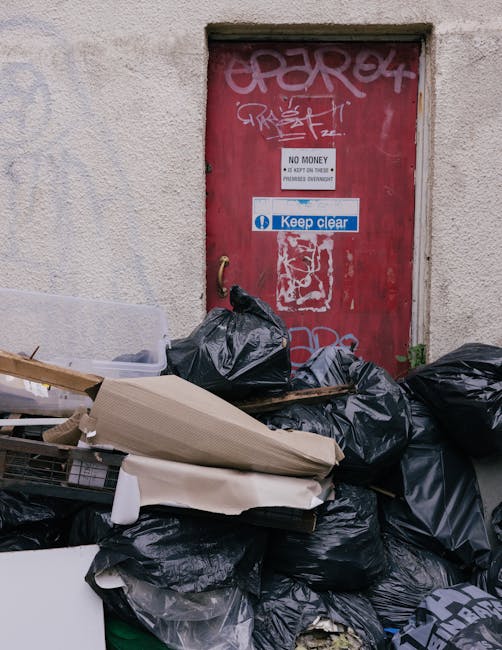
Avoid hidden rubbish removal costs in Osterley: what to know
If you are trying to clear a flat, a house, a garage, or a pile of builder's debris, the last thing you want is a quote that looks tidy at first and then quietly grows. That is exactly why knowing how to avoid hidden rubbish removal costs in Osterley matters. In practice, most surprise charges come from unclear access, mixed waste, awkward lifting, restricted items, or vague terms buried in the small print. The good news? Once you know what to ask, the whole process becomes a lot less stressful and a lot more transparent.
This guide breaks down the real cost traps, how rubbish removal pricing usually works, what to check before booking, and how to compare options without getting caught out. It is written for ordinary local jobs, not just big clear-outs, so whether you are getting rid of one sofa or an entire loft, you will know what to watch for. Let's make it simple.
Why avoid hidden rubbish removal costs in Osterley what to know matters
Hidden rubbish removal costs are frustrating because they are often not obvious until the job is already in motion. You may agree a price based on a photo, only to be told later that the waste is heavier than expected, the property has tricky access, or a few items count as "special disposal". That sort of thing can turn a straightforward clearance into a mildly annoying, budget-busting afternoon. Not ideal.
In Osterley, where homes, flats, side access paths, shared entrances, and trade clearances can all vary quite a bit, pricing needs to reflect the actual work. A small terrace with easy kerbside access is one thing; a fourth-floor flat with no lift and a narrow stairwell is another. The more accurate the quote, the less room there is for surprise add-ons later.
It also matters because rubbish removal is not just about taking things away. It is about sorting waste correctly, loading safely, and disposing of it in line with UK expectations for duty of care and lawful waste handling. A cheap quote that cuts corners is not a bargain if it leads to delay, extra charges, or poor service.
Practical takeaway: a good price is not simply the lowest price. It is the price you can trust to stay close to the final bill once the team sees the job in person.
How rubbish removal pricing and charges usually work
Most rubbish removal services price work by a mix of volume, weight, labour, and item type. That sounds a bit technical, but it really just means they look at how much space your waste takes up, how heavy it is, how hard it is to remove, and whether anything needs extra handling.
Here is the plain-English version.
- Volume-based pricing: common for mixed household waste, furniture, garden waste, and general clear-outs.
- Weight-based pricing: often used when waste is particularly dense, such as rubble, soil, tiles, or heavy renovation debris.
- Labour-based pricing: may apply when the job needs extra movers, long carries, stairs, or dismantling.
- Item-based pricing: sometimes used for specific collections like appliances, mattresses, sofas, or confidential shredding.
The hidden cost problem usually appears when the initial estimate was based on incomplete information. For example, a customer may send a quick photo of some black bags, but the bags are packed with rubble and broken tiles. Or the quote may assume easy loading from a driveway, yet the waste is actually three floors up and through a cramped hallway. The quote was not necessarily dishonest; it was just incomplete. And that's where misunderstandings start.
If you are comparing services, it helps to understand what is and is not included. A fair quote should usually explain:
- collection and loading
- labour time
- transport and disposal
- VAT, if applicable
- charges for restricted items or unusual access
Some companies also make their quote process clearer through dedicated pricing information, like the guidance on pricing and quotes. That kind of transparency is useful because it gives you a better idea of what is covered before anyone turns up at the door.
Key benefits and practical advantages
Being careful about hidden rubbish removal costs is not just about saving money, although yes, that is a big part of it. It also makes the whole clearance process smoother and less stressful. Truth be told, most people are not annoyed by the collection itself; they are annoyed by uncertainty.
1. You can budget properly
When the price is clear, you can plan the job with confidence. That matters whether you are clearing out a spare room, preparing a rental property, or getting rid of post-renovation waste after a long week of dust, tape, and broken packaging.
2. You avoid awkward on-site renegotiation
No one wants a conversation at the doorstep where the price suddenly changes because of "extra labour". Clear detail upfront prevents that. You keep control, and the job starts on the right foot.
3. You can compare like with like
A transparent quote lets you compare providers fairly. If one quote includes loading, disposal, and VAT while another leaves out two of those things, the cheaper option may not be cheaper at all.
4. You reduce delays
Unexpected charges often lead to hesitation or disputes. Clear pricing keeps the collection moving. Simple, really.
5. You can choose the right service for the waste type
If you know the cost drivers, it is easier to decide whether you need a general rubbish removal service, a specialist appliance collection, or something more specific such as builders waste clearance or furniture clearance.
Who this is for and when it makes sense
This advice is useful for almost anyone booking waste removal in Osterley, but it is especially helpful if you are dealing with a job that feels a bit unclear on size or complexity. That is where hidden charges tend to appear.
You will probably benefit most if you are:
- clearing a home after a move or refurbishment
- emptying a loft, garage, shed, or storage space
- getting rid of one-off bulky items
- removing trade waste from a small project
- preparing a flat for tenants, sale, or handover
- dealing with mixed waste and not sure how much it weighs
It also makes sense if you are deciding between different routes. For example, a house clearance, a flat clearance, and a garage clearance may seem similar at first glance, but the access, sorting, and volume can be very different. A one-bedroom flat with no lift can actually be more awkward than a larger property with easy driveway access. You notice these things fast once the team starts carrying bags downstairs, honestly.
Relevant services like house clearance, flat clearance, and garage clearance can help match the job to the right type of removal, which often reduces the risk of pricing surprises.
Step-by-step guidance
If you want to keep costs predictable, follow a simple process before you book. It does not have to be fancy. It just has to be thorough enough for an accurate quote.
Step 1: Sort the waste into broad categories
Separate general waste, furniture, appliances, garden waste, rubble, and anything that might be hazardous. Even a rough split helps. A mixed pile of everything tends to create the biggest pricing uncertainty.
Step 2: Take honest photos
Take a few wide shots and a few close-ups. Show the full pile, access points, stairs, gates, and anything awkward. If there is a tight hallway or low ceiling, include that too. A photo of the waste alone is useful; a photo of the route out is better.
Step 3: Measure what matters
You do not need exact engineering precision here. Just note approximate length, width, height, number of rooms, or number of bulky items. If you are estimating a loft clearance, for example, mention whether the space is boarded, cramped, or full of awkward boxes. Those little details matter more than people think.
Step 4: Ask what is included in the quote
Do not be shy about this. Ask whether the price covers labour, loading, disposal, access time, VAT, and any item-specific fees. If the answer is vague, treat that as a signal.
Step 5: Check for restricted items
Some items can incur extra charges because they need special handling, documentation, or disposal routes. Appliances, fridges, mattresses, some upholstered furniture, and certain waste streams can fall into this category. If you are unsure, ask directly rather than guessing.
Step 6: Confirm access and timing
Parking, loading restrictions, busy roads, and long carry distances can all affect the final job. In a local area like Osterley, this can be as simple as finding the quickest route to the property or timing the collection to avoid peak traffic. Small thing, big difference.
Step 7: Read the terms before you book
It is not glamorous reading, admittedly, but terms and conditions matter. They tell you how changes are handled, what happens if the load differs from the estimate, and whether there are any minimum charges. If you are booking online, it is worth looking at the provider's terms and conditions before you commit.
Step 8: Keep your confirmation details
Save the quote, booking time, and any written notes about access or included items. If anything needs clarifying later, you will have a record to point back to.
Expert tips for better results
After plenty of clear-outs, the same few habits keep coming up. The people who avoid hidden costs are usually not lucky. They are simply prepared.
- Be specific about the waste mix. "A bit of everything" is the phrase that creates confusion. Say whether it is mainly furniture, general waste, garden cuttings, or renovation debris.
- Flag difficult access early. Steep stairs, shared entrances, no parking, narrow paths, or long carries can change the job more than the waste itself.
- Ask whether item limits apply. Some services price by load size but still reserve the right to charge more for heavy single items. Best to know up front.
- Check if dismantling is included. If a wardrobe, bed frame, or shed needs taking apart, that can take time. Clarify whether dismantling is part of the service.
- Tell them about special items. Things like fridges, freezers, and some electricals may need specific handling. If you need fridge and appliance removal, mention it from the start.
- Use one contact point. If a partner, neighbour, or tenant is also involved, make sure everyone gives the same description. Mixed messages lead to mixed prices.
A slightly boring tip, but a very good one: ask for the price to be stated in writing. Not because everyone is trying to pull a fast one, but because memory is messy. People forget. Emails don't.
Expert summary: The best protection against hidden rubbish removal costs is not haggling harder; it is giving better information before the job begins.
Common mistakes to avoid
A lot of unexpected rubbish removal charges come from a few repeat mistakes. These are easy to miss when you are in a rush.
Booking on price alone
The cheapest quote is not always the best value. If the cheapest company has unclear rules around access or special items, the final bill can end up higher than the quote that looked more expensive at first.
Sending one weak photo and hoping for the best
A dim photo taken from across the room rarely tells the full story. If the team cannot see what they are dealing with, they are likely to quote conservatively. Fair enough, really.
Forgetting about access
This is the classic one. The waste may be small, but if it is on the top floor, behind several doors, or blocked by furniture, the job becomes more labour-intensive. Access can be the hidden cost hiding in plain sight.
Mixing restricted waste with general waste
Hazardous or awkward items should never be casually added into a general pile. If you need hazardous waste disposal, say so before collection. Trying to hide it only causes problems later.
Assuming all furniture is treated the same
One sofa is not always the same as another sofa, and one mattress can be priced differently from a lightweight chair. If you have larger items, look at specific services such as mattress and sofa disposal or furniture disposal.
Not checking payment terms
Some providers want payment upfront, some on completion, and some have specific rules for deposits or amendments. If you want fewer surprises, it helps to understand how payment is handled. The page on payment and security is a good place to look for that kind of reassurance.
Tools, resources and recommendations
You do not need special equipment to avoid hidden rubbish removal charges, but a few simple tools make the process smoother.
- Phone camera: take wide photos, close-ups, and access shots.
- Room measurements: rough dimensions can help estimate load size.
- Notebook or notes app: keep a list of everything included in the pile.
- Access checklist: parking, gates, stairways, lift availability, and carry distance.
- Item list: note anything bulky, heavy, electrical, or potentially restricted.
If you want to plan the waste type more carefully, the guide on what can go in a skip can be useful even if you are not hiring a skip. It helps you think about waste categories in a practical way, which makes quotations less vague.
For bigger clear-outs, the most helpful supporting pages are often the ones that match the job type rather than the vague broad stuff. For example:
- home clearance for fuller domestic jobs
- office clearance for workplace moves and old equipment
- garden clearance for green waste and outdoor clutter
- builders waste clearance for renovation debris and trade materials
Law, compliance, standards, or best practice
Waste removal is one of those services where good practice matters a great deal. You do not need to be an expert in waste law to book a collection, but you do want a provider that handles waste properly and communicates clearly.
In the UK, waste should be collected, transported, and disposed of responsibly. For the customer, the main practical point is simple: use a provider that is transparent about what they take, how they handle it, and where possible, how they separate recyclable material from general waste. That kind of approach supports better environmental outcomes and reduces the risk of problems later.
Best practice also includes:
- clear quotes before collection
- accurate waste descriptions
- safe lifting and loading methods
- responsible handling of electricals and restricted items
- respect for site safety and access limitations
- honest communication if the job changes
For business customers, compliance becomes even more important. Offices, shops, landlords, and contractors may need a more structured service, especially if they are dealing with confidential documents, appliances, mixed commercial waste, or regular clearances. In those cases, relevant services such as business waste removal and confidential shredding can be a better fit than a one-off general collection.
You can also look at how a provider talks about safety and responsibility. Pages like insurance and safety and health and safety policy can tell you a lot about whether the company treats the job seriously or just wants to get in and out quickly.
Options, methods, or comparison table
There are a few different ways to clear rubbish, and the cheapest-looking option is not always the easiest in real life. Here is a simple comparison.
| Method | Best for | Typical advantages | Possible hidden cost risk |
|---|---|---|---|
| Man-and-van rubbish removal | Mixed household items, bulky waste, same-day jobs | Fast, flexible, collection included | Access, labour, and item surcharges if details are unclear |
| Skip hire | Longer projects, renovation waste, ongoing loading | Convenient if you want time to fill it | Permit issues, size mismatch, restricted items, overfilling |
| Specialist item removal | Appliances, sofas, mattresses, sensitive materials | Better handling of specific waste types | Extra charges if the item category was not declared properly |
| Full house or office clearance | Large clear-outs, end-of-tenancy, relocations | Organised, efficient, hands-off | Cost changes if the volume or access differs from the estimate |
If you are comparing methods, think about the total effort, not just the headline price. A skip may seem simple until you factor in driveway space, permit rules, and the fact that you still have to load it yourself. A collection service may cost more on paper but save you a full day of lifting and sorting. Not every job needs the same answer.
Case study or real-world example
Here is a realistic example from the sort of job that often causes confusion.
A homeowner in Osterley is clearing a spare room after a renovation. They have a broken wardrobe, a mattress, two boxes of mixed rubbish, a small pile of wood offcuts, and some old packing materials. They send a single photo taken in low evening light. The quote they receive assumes a fairly small load and easy access.
On the day, it turns out the wardrobe needs partial dismantling, the stairwell is tight, and the waste pile is a little larger than it first appeared. If those details were not discussed upfront, the final price may rise. That is not always a scam. It is often a simple mismatch between the information provided and the real job.
Now compare that with a second version of the same job. The customer sends clear photos, notes the stairs, mentions the wardrobe, and confirms there is no lift. The provider can price the job more accurately from the start. The quote may be slightly higher at first, but it is more likely to stay stable. The second version is far less stressful, and usually faster too.
That is the pattern, really. Better information leads to cleaner pricing. Cleaner pricing leads to a calmer day. Funny how that works.
Practical checklist
Use this quick checklist before you book rubbish removal in Osterley.
- Have I described all the waste clearly?
- Have I sent good photos from more than one angle?
- Have I explained access, stairs, parking, and carry distance?
- Do I know whether the quote includes labour and disposal?
- Have I mentioned any bulky, heavy, or awkward items?
- Have I identified appliances, mattresses, or restricted waste?
- Have I asked about VAT and any extra charges?
- Have I checked the terms and conditions?
- Do I have the quote in writing?
- Have I chosen the right service type for the job?
If you can tick most of those boxes, you are already ahead of the game. And if you cannot, that is fine too. It just means you should ask a few more questions before confirming the booking.
Get a free quote today and see how much you can save.
Conclusion
To avoid hidden rubbish removal costs in Osterley, the main thing to remember is this: clarity upfront is worth more than a bargain quote that changes later. Describe the waste properly, show the access, ask what is included, and read the terms before you book. That one habit will save you a lot of hassle.
The best rubbish removal experience usually feels boring in the best possible way. No surprise invoices. No awkward back-and-forth. No drama at the kerbside. Just the job done, the space cleared, and that satisfying sense that you can finally breathe again. If that is what you are aiming for, you are already asking the right questions.
And honestly, that is half the battle. The rest is just choosing carefully.
Frequently Asked Questions
What causes hidden rubbish removal costs in Osterley?
Common causes include inaccurate waste descriptions, difficult access, heavy items, extra labour, restricted waste, and unclear terms around VAT or disposal. Most surprises happen because the original quote did not reflect the full job.
How can I get a more accurate rubbish removal quote?
Send clear photos, describe the waste honestly, mention stairs or parking issues, and list any bulky or special items. The more detail you give, the less likely the price is to change later.
Are rubbish removal quotes usually based on weight or volume?
They can be based on volume, weight, labour, or a mix of all three. It depends on the type of waste and how the provider structures pricing. Heavy rubble and mixed general waste are often treated differently.
Do stairs or difficult access cost more?
They can, because they increase labour time and effort. A ground-floor collection with easy parking is simpler than carrying bulky waste down several flights of stairs. It is best to mention access up front.
Should I mention appliances and mattresses before booking?
Yes. Items like fridges, freezers, mattresses, and sofas may need different handling or pricing. Declaring them early helps avoid extra charges and keeps the quote accurate.
Is the cheapest rubbish removal quote always the best choice?
Not usually. The cheapest quote may exclude labour, VAT, or special item handling. A slightly higher quote that includes everything can be better value because it is less likely to change.
What should I check in the terms and conditions?
Look for wording about quote changes, access assumptions, minimum charges, restricted items, cancellation rules, and payment timing. Those are the sections where hidden costs often appear.
Can I book rubbish removal for a flat in Osterley?
Yes. Flat clearances are common, but they can involve stairs, shared entrances, limited parking, and tighter access. That is why flat jobs need clear information before the collection day.
What if I have builders' waste mixed with household rubbish?
Tell the provider exactly what is mixed in. Builders' waste can include heavier or more awkward materials than general household rubbish, so it may be priced differently. A dedicated builders waste clearance service may be more suitable.
How do I avoid paying extra on the day?
Be upfront, give precise details, and confirm everything in writing before the visit. Ask what is included, whether any item charges apply, and whether access issues could change the price.
Is it worth using a dedicated clearance service instead of a general waste option?
Often yes, especially for larger or more awkward jobs. A dedicated service can be more efficient and clearer about pricing for specific tasks such as loft clearance or office clearance.
What if I am not sure what type of waste I have?
Describe the mix as best you can and ask the provider for guidance. If you are unsure about electricals, appliances, or potentially hazardous materials, it is better to raise the question early than guess and risk extra charges.